Tuesday, June 26, 2018

Why Annual Reports are important for NGO?

Credibility, trustworthiness, and transparency are some of the terms commonly heard while discussing about any organisation, be it a for-profit organisation or a not-for profit organisation. And, as an organisation grows and expands its business or service, these three factors become even more significant. Brands and businesses from across all sectors strives to maintain their credibility and trustworthiness by being transparent to its stakeholders in one way or the other, and publishing Annual Report is one of the many ways.

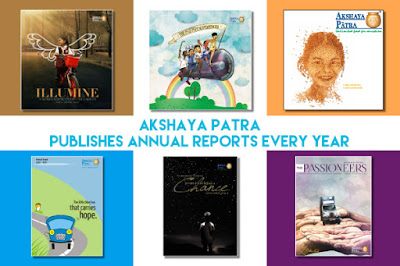
Annual Reports are comprehensive publications covering highlights, developments and audited financial statements of an organisation. Remaining specific to not-for-profit organisations, Annual Reports are a mandatory document that the organisation has to publish and make available to all its stakeholders. NGO Annual Reports instil a sense of confidence among all its stakeholders regarding the organisation’s operations, growth, and fund utilisation. Heeding to this, many NGOs like The Akshaya Patra Foundation diligently publishes this report annually.
NGO Annual Report

Akshaya Patra is a mid-day meal NGO and is also considered as a top NGO in India. It has been implementing the Mid-Day Meal Scheme since 2000 and currently provides nutritious meals to more than 1.7 million government school children on each school day. The Foundation is headquartered in Bengaluru and has operational units across 36 locations of 12 states in India. The Foundation was selected to partner as a mid-day meal NGO after it fulfilled all the criteria stated in the NP-NSPE 2004 guidelines. One of the criteria in the guideline is “the chosen NGO will furnish to the body assigning the work to it an Annual Report along with an audited statement of accounts in terms of all grants received from the State Government, both in cash and kind, duly certified by an approved Chartered Accountant”, and the NGO is adhering to it since the beginning.

For NGOs, transparency is a key factor in building trust and reliability. Hence, Akshaya Patra ensures that it maintains transparency regarding all its activities as a mid-day meal NGO. The Foundation publishes its Annual Reports at the end of each financial year. It reports all the developments, achievements, and audited financial statements of the completed financial year, along with plans for the upcoming year. This report has received appreciation and recognition in national and global platforms amidst NGO Annual Report category as well as general categories for accuracy in reporting and creative representation of the report.

A non-profit organisation can be considered to be performing NGO role in India in totality only when it makes available details about its operations and services to its stakeholders and complies to standard financial procedures to release its financial statements. In this regard, Akshaya Patra has been keeping up with the prerequisites of a reliable NGO. This top NGO in India complies with the Indian Accounting Standards issued by the Institute of Chartered Accountants of India (ICAI). The Foundation also complies with the International Financial Reporting Standards (IFRS) after adopting this format of reporting in 2008-09. Akshaya Patra has been recognised and appreciated with the:

ICAI Gold Shield Award for “Excellence in Financial Reporting” for five consecutive years since 2008-09 inducting Akshaya Patra into Hall of Fame. In addition, to the consecutive wins, the Foundation has also has bagged the award for the latter years
South Asian Federation of Accountants (SAFA) Best Presented Accounts Award for four consecutive years: 2008-09 (Certificate of Merit), 2009-10 (2nd runner-up), 2010-11(Gold Award), 2011-12 (Silver Award) and 2012-13 (Gold Award)
Australasian Reporting Award 2017
24th Annual Communicator Award for Excellence 2018

These accolades for the NGO Annual Reports have increased the credibility of the organisation and has instilled a sense confidence and trustworthiness among all its stakeholders. In conclusion, Annual Reports form a very significant document for an NGO. These reports are a proof that while working towards their respective causes NGOs are accountable and responsible for optimum utilisation of the contributions - monetary and non-monetary, made by their stakeholders.

Friday, June 22, 2018

Importance of childhood nutrition

‘Nutrition’ has been a never-ending topic of discussion among mothers, paediatricians, and dieticians, and of lately, has seeped into the conversations of the health-conscious generation too. It may appear overrated or it may sound cliched, but the fact is nutrition indeed is a vital aspect of a healthy life and deserves conscious and considerable attention; especially during the growth years of children.

Importance of nutrition during formative years

Childhood is the most eventful of all developmental stages - be it physical, cognitive, social, emotional, or language and communication – children are the most active learners during this phase. However, children must be provided with adequate nourishment for them to achieve various developmental milestones age-appropriately. A balanced nutritious diet comprising of the right amount of essential nutrients such as carbohydrates, proteins, and fats, vitamins and minerals become vital for proper growth and development of children. Heeding to this NGOs like The Akshaya Patra Foundation have taken up food and nutrition as their core cause. Akshaya Patra is an NGO that implements the Mid-Day Meal Scheme and has been providing nutritious meals to children of government schools and government-aided schools since 2000.

Healthy Children

Benefits of good nutrition

There are several advantages of good nutrition for children. Here is a handful of them:

Proper nutrition supports age-appropriate growth and development in children;
It improves the immunity level in children thereby keeping infections and diseases at bay;
It enhances cognitive functioning, level of activeness, social connections and interest to learn and explore different activities;
Better-nourished children are more active at school and perform well in their academics and other school activities.
Under-nourishment leads to low immunity, a decrease in activity levels, social interactions, urge to learn, and cognitive functioning, and poor academic performance. It also has an adverse effect on the child’s physical and emotional development.

Role of mid-day meal in nourishing children

The Mid-Day Meal Scheme is a government initiative to provide healthy and nutritious meals to children of government schools and government-aided schools. The children of these schools hail from not-so-privileged socio-economic backgrounds and for them, the mid-day meal becomes the only source of nutrition, and many times it is the only proper meal they get for the entire day. The Mid-Day Meal Scheme is aimed to counter classroom hunger, address malnutrition, increase school enrolment, increase school attendance, and improve socialisation among children belonging to different castes. Favourably, several studies report a positive impact of the mid-day meal on all the mentioned aspects. So, that the mid-day meal and its nutritious value benefit more children, Akshaya Patra is strategically and sustainably expanded its reach across the country.

Gift a nourished childhood

A well-nourished child grows up to be a healthy and confident adult, something that is important not only at a personal level but also at a societal level. Imagine there are 100 children in your neighbourhood and 80 of them are under-nourished. Do you think they will be interested in anything else apart from getting some food? Do you think they will grow up to be resourceful? Unfortunately, not. Hence, it is the responsibility of the ‘haves’ to take care of the ‘have-nots’ so that the latter is empowered enough to become self-dependent and resourceful. By supporting Akshaya Patra you can ensure healthy and wholesome food for millions of children. Choose to offer a donation for children because every child deserves the right to nutritious food and the right to attend school.

Tuesday, May 22, 2018

NGO in Gujarat & Its Kitchen

In 1984, Gujarat became the second state after Tamil Nadu to implement the Mid-Day Meal Scheme. Over the years, it has been observed that this scheme has had significant improvement in the nutritional and educational status among children. According to 2011 Census, the literacy rate in Gujarat had risen to 79.31% as compared to 69.14% in 2001, with a male literacy rate of 87.23% and female literacy of 70.73%. As a supporting arm to government’s effort in improving educational scenario, The Akshaya Patra Foundation, an NGO in Ahmedabad began its mid-day meal service in the state in 2009.

Mid-day meal in Gujarat

Akshaya Patra is an Indian mid-day meal NGO headquartered in Bengaluru, Karnataka. It has been in the service of providing mid-day meal since 2000. The Foundation began its journey of providing nutritious meals to the children of Gujarat by establishing its first kitchen in Vadodara in 2009. Currently, this NGO is feeding a total of 4,07,452 children in 1,621 government schools across the state.

Akshaya Patra Kitchens in Gujarat

Akshaya Patra is providing mid-day meal in Gujarat from its five centralised kitchens located in Ahmedabad, Bhavnagar, Vadodara, Surat, and Kalol. Of these, three kitchens namely Ahmedabad, Vadodara, and Surat are ISO 22000:2005 certified kitchens and the Bhavnagar and Kalol kitchens are in the process of certification. Each of the kitchens strictly adheres to hygiene and cleanliness practices while preparing meals. To enhance productivity and efficiency of operational processes, Kaizen, Continuous Improvement Projects and Six Sigma methodologies have been adopted in these kitchens.

Akshaya Patra Ahmedabad Kitchen

All the kitchens are highly mechanised cooking units equipped with roti-making machines, cauldrons, trolleys, rice chutes, grinding machines, potato peeler machines, vegetable cutting machines, atta kneaders, RO plants, and rice-cleaning machines. Each of the kitchens has dedicated customised delivery vehicles to transport cooked meals to all beneficiary schools.

Menu of Gujarat kitchens

So that each child enjoys their school lunch, the meal menu of Gujarat kitchens consists of various native items to suit the local taste. Some of the menu items are: Peas pulao, kabuli chana pulav, vegetable pulav, groundnut jeera pulav, soya chunks pulao, lauki khichdi, jeera rice, plain rice, soya dal, chana dal, dal fry, mixed dal, roti, thepla with til and mix vegetables, thepla with potato, thepla with louki, mix vegetable curry, mixed vegetable with desi chana, and dal dhokli.

Eco-friendly measures in kitchens

Alike all kitchens of Akshaya Patra, this NGO in Ahmedabad also implements various eco-friendly measures in its kitchen operations to save cost and reduce carbon footprint while maintaining the efficiency of production. Some of the initiatives taken in the kitchens of Gujarat are:

PNG( Piped Natural Gas) for cooking
Plantation and agriculture in small scale
Bio-gas Plant
Effluent Treatment Plant(ETP)
LED lighting in the kitchens

Socio-developmental initiatives

While focussing on their core activity of providing mid-day meal in Gujarat, the kitchens have also taken several socio-developmental initiatives for the betterment of the beneficiaries and the society. Some of the initiatives are:

Providing meals at Anganwadi centres, Integrated Child Development Services (ICDS), Government Hospitals, and Pawagar Mandir
Cookies distribution
Shoe Distribution
Swachh Bharat Abhiyaan
Health camps and check-ups
School activities like fairs and exhibition, school visits to kitchen, guest visits to beneficiary schools, and symbolic feeding

As a mid-day meal NGO, Akshaya Patra wants to benefit more children with its wholesome meals. While it is receiving aid from government and donors, it needs your support too. You can instantly be a part of the NGO’s endeavour by contributing online donations for NGO. You can also make a difference by opting to adopt a school or donate a vehicle for delivering meals to schools. Your contribution will not only provide school lunch, but it will also give an opportunity to children to attend school and benefit from the much-needed education and other school activities that will support their overall development as responsible citizens. So, step up and support the mid-day meal programme of Akshaya Patra.

Thursday, May 17, 2018

NGO in Uttar Pradesh & Its Kitchen

NGO in Uttar Pradesh

Reportedly, over the next 10 years, Uttar Pradesh and Bihar will be home to 31% of the youngest Indian population between five and 14 years. Specifically, Uttar Pradesh already tops the list of child population in the country with 200 million aged between five and 14 years. This indicates that soon this 200 million will be a part of the country’s workforce, making the health and education of this young population a matter of utmost importance, not just for the progress of the state but for the nation as a whole. Unfortunately, the current education scenario in Uttar Pradesh is not a very pleasant sight with its low literacy rate of just 67.7%. In addition, the Unified-District Information System for Education (U-DISE) Flash Statistics 2015-16 reports that Uttar Pradesh has the worst student-teacher ratio in India and it also has the poorest transition rate from primary to upper primary school. The state also ranks poorly in learning outcome even though it has a higher per-student spending compared to the rest of the country. The Government has taken several steps to improve this prevailing critical situation, and Mid-Day Meal Scheme is one of the important interventions. The efforts of the government to provide mid-day meals have been furthered by The Akshaya Patra Foundation, a mid-day meal NGO in Lucknow and Vrindavan.

The Akshaya Patra Foundation is a mid-day meal NGO in India. Established in 2000 and headquartered in Bengaluru, Karnataka, the NGO currently feeds more than 1.7 million children of 14,173 government schools in 36 locations of 12 states in India. It began its journey of providing mid-day meal in UP in 2004 by establishing a centralised kitchen in Lucknow. In total, Akshaya Patra is currently reaching out to 2,11,680 children in 3,021 schools in the state.

Mid-day meal in UP

As a NGO in Lucknow, Akshaya Patra provides mid-day meals to 91,418 children in 1,011 government schools and in Vrindavan the NGO provides school lunch to 1,20,262 children in 2,010 government schools.

The Foundation has established hi-tech centralised kitchens in both the locations. These kitchens are equipped to prepare 1 lakh meals per day and they serve locally palatable meals like roti (Indian flatbread) with sabzi (vegetable curry) along with other native food items for the main reason that maximum children should eat their school lunch readily and joyfully and reap the benefits of nutritious meals.

Roti making machine

Since roti is a staple item in the North Indian menu, the Lucknow and Vrindavan kitchens are equipped with roti making machines. These machines have the capacity to roll out up to 200,000 rotis from 6000 kilograms of wheat flour. Aside from roti making machines, these kitchens are equipped with rice cauldrons of at least 500 litres capacity, dal cauldrons with the capacity to cook 1200 litres to 3000 litres, trolleys, rice chutes, cutting boards, knives and other similar equipment. The cooked meals are packed in insulated vessels and are transported to schools in insulated vehicles. The delivery vehicles are enabled with GPRS tracking system for safety and on-time delivery of meals.

Alike all kitchens, the Lucknow and Vrindavan kitchens strictly adhere to hygiene and cleanliness practices while preparing meals and both are ISO 22000:2005 certified kitchens. Since Kaizen, Continuous Improvement Projects and Six Sigma methodologies form an integral part of Akshaya Patra kitchens, the same is practiced in Lucknow and Vrindavan kitchens too. As an NGO providing mid-day meal in UP, Akshaya Patra has observed significant improvements in various fronts. According to a third party study conducted by Sigma Research and Consulting Pvt. Ltd. in 2014, Uttar Pradesh showed a positive trend in the following variables: elimination of classroom hunger, social equity, nutrition and health, enrolment, and retention and attendance. It scored a total of 9.43 on a scale of 10, thus revealing that mid-day meal has had a significant impact on children.

This NGO in Lucknow wants to expand its reach and benefit more children in the state. But, in doing so, it requires support from you. You can be a part of the NGO’s endeavour to nourish children by either contributing funds or by opting to donate a vehicle to deliver meals to schools. Your contribution will ensure that children receive at least one nutritious meal per day. It will also make you a part of the change that will get manifested in the form of healthy and educated generation. Step forward, contribute, and be a part of nourished and educated India.

Friday, April 13, 2018

An NGO's effort to make health is wealth for children

NGO for Children

‘Health is wealth’ is a familiar phrase and it becomes even more important with respect to children. The first five years of a child is considered to be the most crucial growth phase as a significant amount of development and learning happens during these formative years. And, an important aspect that promotes healthy growth is consumption of nutritious diet. Nutrition improves cognitive functioning, appropriate physical development, maintains energy levels, and provides enhanced immunity against infections and diseases. And, there is enough evidence to establish the relationship between nutrition, health, and learning.


So that every child receives the best of nutrition, many NGOs have taken it up as their core cause to provide wholesome meals to children mainly targeting the lower socio-economic strata of the society. One such NGO for children in India is The Akshaya Patra Foundation. Established in June 2000, this NGO implements the Mid-Day Meal Programme in government schools across the country with the vision ‘No child in India shall be deprived of education because of hunger’. For the past 17 years, the Foundation has been tirelessly working towards providing freshly cooked, nutritious school lunch to school children so that children continue schooling and at the same time benefit from the programme health-wise. Before talking further about this NGO and its work towards promoting health and education, here is a list of reasons that explains the significance of investing in nutrition, health, and education of children:


Thus, it is evident that nutrition, health, and education become critically important during the growth years of children.

Well, heeding to the above-mentioned aspects of nutrition and health, Akshaya Patra, the NGO for children strives to provide ‘unlimited food for education’. In order to maximise the benefit of the Mid-Day Meal Programme, Akshaya Patra operates to formats of kitchen facility – centralised kitchen to provide school lunch in urban and semi-urban areas, and decentralised kitchens to provide school lunch in remote areas. To ensure meals are nutritious, the NGO employs various quality measures in its operations – right from procurement of raw materials to delivering the cooked meals. Raw materials are procured based on Supplier Quality Management System and are inspected as per Food Safety and Standards Authority of India (FSSAI). All the kitchens follow the FIFO (First In First Out) and FEFO (First Expiry First Out) methods while issuing the raw material for production. Washed and sterilised vessels and tools are used for cutting, cooking and transporting food. All employees are trained in good hygiene practices and food safety measures. It is mandatory for each member in the kitchen to follow the hygiene chart comprising of daily shower, use of clean uniforms, head caps, face masks to cover the mouth and nose area, hand gloves, gumboots, other protective gears and hand sanitisation. Cooked food is transported in insulated vehicles to retain the freshness and quality of meals. Continual Improvement Projects, Six Sigma methodologies, 5S, GMP, Lean and Kaizen are some of the process improvement methods implemented across all kitchens.

This charitable trust understands the value of each penny and hence on an average, 92% of the total donation is used towards meeting the programme cost and 8% towards the programme management cost. Such effective management of funds and operations has led the Foundation to grow steadily over the years. From feeding just 1,500 children in five government schools of Bengaluru in 2000, Akshaya Patra has expanded its reach to more than 1.7 million children across 12 states of India. It has impacted young lives with wholesome meals on every school day. So, even though Akshaya Patra is a mid-day meal NGO, it wouldn’t be wrong to say donate for education in India because its service of 17 years has been instrumental in bringing children to school and empowering them with education.

In a nutshell, to create a healthy society, we must focus on the health of children. And, to create a prosperous society, we must focus on the education of children. Only healthy children can contribute to the socio-economic growth of themselves and the society.

Thursday, March 29, 2018

The Social benefits of Tax Exemption in India

There is a compassionate part hidden among all of us. And, the thought of getting out there and doing something for the society also must have crossed our minds many times. But, how often have we actually gone ahead and done it? We get so caught up in our daily humdrum that our benevolence takes a backseat. But, as they say, ‘where there is a will, there is a way.’ So, one of the many ways that can provide you a platform to actively participate in social causes is to engage with an NGO. Every NGO works towards benefitting, uplifting, and sustaining the society by encompassing factors related to social, legal, environment, ecology, health, economy, education, welfare, and the like. The cause of each NGO directly or indirectly reflects the broader perspectives of global organisations such as the UN, UNESCO, WHO, ILO etc. Since NGOs work at the ground zero level of the society; their involvement with a cause brings about a more sustainable outcome. Hence, when you get involved with an NGO it provides you an avenue to constructively participate in a cause.

Giving back to society

In view of the significant role of NGOs and to encourage participation of individuals and businesses in various causes, the Government of India has made the provision of tax exemption in India for all charitable donations. Yes, as per Section 80G of the Income Tax Act, contributing donations to a registered NGO or a charitable trust can avail the donor 100% or 50% exemption on the donated amount based upon the type of charitable trust and the clauses of the Income Tax Act. The exemption is applicable for both online donation and offline donation. However, due to ease and convenience, many donors have started taking the online mode of contributing charity. And, since NGOs understand the worth of each penny, the donor can be rest assured that their money is being utilised in the right way. Hence, considering this form of tax exemption is quite a noble way to contribute towards the society.

Let’s take a couple of instances, if a donor identifies with an environmental cause such as afforestation and contributes towards Save Green, then his taxable income will be utilised towards increasing green cover and initiating several environment-friendly programmes. Similarly, if a donor identifies with child education and nutrition, then donating towards The Akshaya Patra Foundation, an NGO in India will ensure nutritious school meals to government school children on every school day. And, since the NGO is aiming at feeding 5 million children by 2020, every penny of all donations will be directed towards the operational expansion of the NGOs Mid-Day Meal Programme. This means, as a donor, you are providing wholesome meals to children and helping them learn and participate better in school, and you are also contributing towards their healthy growth. So, essentially you are contributing towards a healthier and educated society. And, you are also being a catalyst in nation-building.

Well, as you can decipher from the above-mentioned instances, your taxable income has the potential to transform the society in many different ways. Hence, don’t you think making an online donations or offline donations to NGOs can make the most of the tax exemption in India to upkeep your benevolence, save your hard-earned money while also partaking to uplift the society?

Thursday, March 22, 2018

How can an NGO bring positive change in society?

Right to education

‘Giving back to society’ is not an unheard phrase; in fact, it is quite clichéd. Right from top legislators to the common man, everybody has spoken about and heard of this phrase time and again. So, what does it actually mean? To put it simply, ‘giving back to society’ means helping the needy. We all live in a society and the society provides for us. We are dependent on our community and environment for all our need. So, in turn, it becomes our responsibility to take care of our fellow human beings and our life-sustaining environment. It is no surprise that inequality and difference exists all around us: some are extravagantly wealthy whereas some are struck by poverty, some have the luxury to a lavish spread of fine gourmet whereas some sleep and wake up to extreme hunger, some breathe in fresh air whereas some are struggling under the blanket of soot, some are travelling far and wide to get education in the finest of institutions whereas some do not even have the opportunity to attend primary schooling. These are just a few dots on the huge map of the haves and have-nots. And, the phrase ‘giving back to society’ addresses this very imbalance so that the ‘haves’ step up to provide for the ‘have-nots’ through charity donation, time, skill, and specific resources.

One of the practical ways to channel charitable activities constructively is to get engaged with an NGO. NGOs are legally formed groups independent of government ownership or representation. Their scale of ranges from local to global level and encompasses concerns related to human development, conservation of the environment, animal welfare, and more. The operational structure of NGOs allows them to get involved more closely with a particular issue resulting in a more focussed way of dealing with an issue. And, this is also the reason why NGOs are more effective in bringing about a lasting change in the society. So when you donate charity or invest your time and resources in such organisations, it gives a whole new meaning to your contribution. Heeding to this impact and to increase the involvement of more people with different causes, the Government of India allows tax exemption in India for all donations made towards registered NGOs and charitable trusts under Section 80G of the Income Tax Act. This means your donation will have a double advantage: first, it will help the NGO to make progress in their respective causes; and second, it will make you eligible to claim 100% or 50% exemption on the donated amount based on the defined criterions of the Income Tax Act.

One such organisation that has also been recognised as the top NGO by The Global Journal is The Akshaya Patra Foundation. In 2013, the Foundation was ranked 23rd among the top 100 NGOs featured in the 2013 edition of The Global Journal. Akshaya Patra is an Indian NGO running the world’s largest NGO-run school lunch programme. Headquartered in Bengaluru, Karnataka, the Foundation provides freshly cooked nutritious meals to more than 1.6 million children across 34 locations in 12 states. Over the 17 years of its service, Akshaya Patra has observed significant changes in the schooling pattern of children from the economically disadvantaged background. There has been a rise in enrolment, improved attendance rate, improved health, better concentration, and more active participation of children in school activities. However, this would not have been possible without the support of government and philanthropic donors. With the aim to expand its reach and feed more children, the NGO directs all the received funds towards bettering processes and operations and providing wholesome meals to children.

The one meal that children receive on every school day allows them to hope for a better future. It allows them to continue schooling which makes them more confident to achieve their aims. This makes your charity donation a meaningful intervention in the healthy growth and development of young children, making them resourceful citizens of the country. And, the same donation exempts you from taxes too! Well then, wouldn’t it be a good choice to save tax by ‘giving back to society’?

Wednesday, March 21, 2018

An NGO in India is striding towards nation-building

Every day, Akshaya Patra provides school lunch to more than 1.6 million children across 34 locations in 12 states of India.

Witnessing the interest of Aditya’s interest in computer and solar energy, Akshaya Patra partnered with ITI to provide a computer lab to the school so that children can receive practical knowledge along with theory lessons.

Heeding to Manjula’s interest in theatre and acting, Akshaya Patra enrolled her for a month long mentorship programme at the Bangalore School of Speech and Drama, following which she shone bright at a stage performance.

Akshaya Patra has partaken in several disaster relief activities by providing food to affected people in crisis situations like the devastating Nepal Earthquake and Chennai floods in 2015, the Gorakhpur flood in 2017, and the like.

NGO in India

The Akshaya Patra Foundation is an NGO in India that was initiated with the vision, ‘No child in India shall be deprived of education because of hunger.’ Since its genesis in 2000, this NGO has been striving to address the critical issue of classroom hunger and accessibility to school education through its Mid-Day Meal Programme. Initially, the Foundation served school lunch to just 1,500 children in five government schools in Bengaluru. Taking note of the crucial requirement of school meals, Akshaya Patra gradually began expanding its operations to other parts of the country as well. The Public-Private Partnership, good management, innovative technology, and transparent accounting policies have made the Akshaya Patra’s Mid-Day Meal Programme the world’s largest NGO-run school lunch programme. Today, Akshaya Patra operates 34 kitchens (32 centralised; 2 decentralised) across 12 states, feeding over 1.6 million children, every day.

The role of NGOs in the mid-day meal sector is to provide freshly cooked, nutritious meals to school children with the objective to:

avoid classroom hunger
increase school enrolment
increase school attendance
improve socialisation among castes
address malnutrition, and
empower women through employment

And, several studies done to assess the impact of Akshaya Patra’s meals suggest that the Foundation has been making steady progress in achieving the above-mentioned objectives.

Over the 17 years of service, Akshaya Patra realised that for an overall development of children and inclusive progress of the society, it has to fill certain gaps within its operational realm such as availability of nutritious meals in Anganwadi, providing a platform for children to hone their talents that will help in achieving their goals, and also being available for fellow citizens at the time of need such as natural disasters. So, while performing its core activity of providing mid-day meal, Akshaya Patra also impacts the society with its other feeding initiatives.

Akshaya Patra Initiatives

Witnessing the potential among its beneficiaries, this NGO in India endeavoured to go beyond just providing school meals with its 'Give Every Dream A Chance’ initiative. As a start, Akshaya Patra identified three beneficiaries Shivu, Manjula, and Shekar with the aim to become an astronaut, an actress, and a chef, respectively, and provided them with a month’s mentorship under experts in the mentioned fields. The impact of this initiative was:

Impact of Akshaya Patra

Such initiatives are indeed of prime importance for the overall development of children, and Akshaya Patra is taking steps to implement it within its realm of service.

The dedicated service of the Foundation has been recognised in various forums and here is a mention of just a few of the laurels:

  • Akshaya Patra has been ranked 23rd among the top 100 NGOs featured in the 2013 edition of The Global Journal.
  • This top NGO has also been featured as one of the eight Indian game changers in the inaugural edition of Innowin (India’s first magazine dedicated to innovation).
  • Akshaya Patra became the first NGO to comply with the IFRS and also the winner of the Gold Shield for Excellence in Financial Reporting by the ICAI for five consecutive years, inducting the NGO in the ICAI Hall of Fame.
  • In 2006, Akshaya Patra was considered as a case study at the prestigious Harvard Business School as part of its MBA curriculum.


In an effort to multiply the impact of the Mid-Day Meal Programme, this NGO in India continuously enhances its technologies and processes by implementing Kaizen, Continuous Improvement Projects and Six Sigma methodologies in its kitchen operations. Alongside regular technological interventions, the Foundation has also adopted green initiatives such as biogas plant, briquette boiler, and solar power in some of its kitchens with the aim to reduce carbon footprint and operational costs. Also, in an endeavour to improve the nutritional intake of the beneficiaries, recently it launched a pilot in partnership with the Government of Karnataka to include millets in the school lunch programme.
Undoubtedly, the role of NGOs is significant and important for the overall development and progress of the society. And, organisations such as Akshaya Patra bring about a change in a sustainable manner, right from the grass root level, so that each child grows up to be an asset for the country. Join in the efforts of NGOs and be a part of nation-building.

Tuesday, March 20, 2018

Different ways of getting tax exemption

No matter how much we earn, we all look for ways to save tax. And, as the income tax filing date nears, we try to dig into papers that can save our hard-earned money. Well, instead of stressing up yourself at the last minute, invest your money wisely in schemes that can avail you tax exemptions with ease.

Tax exemption benefit

Here is a list that can help you to save tax on your salary:

House Rent – The Government of India allows exemption of tax for house rents under Section 80GG. House rent is an unavoidable expense that has to be borne by an employee, especially outstation employee, who relocates to different cities to fulfil the demands of their jobs. The eligibility of exemption depends upon certain criterions and the employee has to furnish rent receipts during income tax filing.

Children Education Allowance – This allowance qualifies a salaried person to avail tax benefits for expenditure pertaining to school fees, hostel fees and similar education-related expenses of their children. This benefit can be availed for up to two children only.

Housing Loan – A home loan comes with a specific interest rate. Hence, if a salaried person has taken a home loan then he can furnish the required papers to get a tax exemption on the interest amount.

Donations: Contributing donations to a registered NGO or a charitable trust can exempt you from paying taxes on the donated amount under Section 80G. The donor can either claim for 100% or 50% exemption on the donated amount based upon the receiver and the criterions set by the Income Tax Act.

Medical Insurance – Under Section 80D, one can claim for exemption on the medical insurance policy. It is applicable to the policyholder and the dependent members too. It is a good opportunity to save tax while remaining secured for any kind of health emergency.

As it is evident that making an investment is a good way to save tax, and, even better if this can bring about a positive change in the society. Offering charity to a not-for-profit can create a win-win situation for the donor and the society. One such NGO is The Akshaya Patra Foundation that provides school lunch to more than 1.6 million government school children on every school day. The Foundation operates its kitchens in 34 locations in 12 states of India. It strives to provide unlimited food for education so that ‘No child in India is deprived of education because of hunger.’ While sustaining its service for the current beneficiaries, the Foundation aims to expand its reach to more locations so that more children can be nourished from its Mid-Day Meal Programme. Akshaya Patra is a recognised charitable trust eligible to offer tax exemptions to its donors as per Section 80G of the Income Tax Act. The Foundation directs all the funds towards providing wholesome meals to children so that they grow up to be healthy, educated, and responsible assets for the country. Thus, by choosing to contribute online donations for NGO, you are not only saving tax on your income but also securing the lives of young children.

So, take a stand and support the cause that will provide for the less-privileged, foster hope, and constructively enrich our society.

Disclaimer: Each of the above-mentioned tax exemption plans has its own terms and conditions. Hence, it is advised to understand the respective tax exemption clauses prior to making an investment or a claim.

Tuesday, March 13, 2018

How right food matters for studies during exam?

It would not be wrong to say that exam fear has been in trend since time immemorial, and surprisingly it has remained unchanged! Doesn’t matter how brilliant a student is, exam time injects the fear in one and all. Even after attending motivational speeches, listening to loads of advice, and sitting through presentations on how to tackle exam tension, each and every child undergoes some degree of mental stress resulting in nervousness, blackout, panic, palpitation, and mood swings. Often times these changes also lead to eating disorder during exams. Some children may reduce their food intake, whereas others may consume twice or thrice their regular diet. Though unintentionally, but dietary change further disturbs the bodily equilibrium. So, it becomes imperative to maintain a good diet during exams, no matter how tensed the child is. Just like how the charity for children, The Akshaya Patra Foundation maintains the nutrition level in all their meals, no matter what is the menu and which location it is being served at.

education for children

Being cognizant of the core role of NGOs in the mid-day meal sector, Akshaya Patra ensures that through its school lunch programme it meets the main objectives of the Mid-Day Meal Scheme, i.e.:

avoid classroom hunger
increase school enrolment
increase school attendance
improve socialisation among castes
address malnutrition
empower women through employment

This charity for children understands the importance of right nutritional balance for the proper growth and development of children. Over the 17 years of serving mid-day meals, the NGO has also witnessed the positive impact of a well-balanced diet on the level of concentration, health, and activeness among children. Hence, a meticulous and detailed menu is designed by including variety of items in the meal menu while adhering to the nutritional and dietary norms stated by the Central Mid-Day Meal Scheme. In addition, each kitchen of Akshaya Patra complies with standard operational processes and maintains utmost cleanliness and hygiene while preparing and delivering cooked meals.

Not just with regards to mid-day meal, but meals at home must be well-balanced too. Here are some quick tips about healthy eating during exams:
Smart snack at regular intervals – Instead of forcing down food during three big meals, it is wise to take breaks for small meals at regular intervals. Children must snack smartly by including items such as fruits, toast spread with peanut butter, vegetable sandwich, fresh juice, etc.
Choose real instead of supplementary – Dietary supplements may sound convenient and good, but real food is always better. Hence, peeling an orange for Vitamin C is more beneficial than opening a pill case. Eating fresh fruits and salad vegetables will provide children with all the required nutrients like iron, B Vitamins, Vitamin C, protein, calcium, beta-carotene, antioxidants, fibre, and much more.
Drink water – It is very important to keep the body hydrated else it may lead to fatigue and lack of ability to focus. Hence, drinking lots of water and fluid intake such as fresh juices, and milk becomes a must.

As a process of self-evaluation, Akshaya Patra at regular intervals conducts impact studies in partnership with third-party evaluators. These impact studies also bring to fore the important role of NGOs and the impact they are creating in general along with Akshaya Patra’s contribution in particular. In one such study conducted by Sigma Research and Consulting Pvt. Ltd. titled as ‘Assessment of mid-day meal programme in 8 states 2014’ states that the mid-day meals provided by Akshaya Patra fulfilled the recommended nutritional requirements while also being healthy and hygienic.

Well, as the exam begins in private schools so it begins in government schools too. And, interestingly the intention of students in both private and government schools is the same – to score good marks and come out in flying colours. Hence, support the cause of Akshaya Patra because by contributing towards mid-day meal you will indirectly donate for education in India too. So, contribute today and help children to receive adequate nutrition for this exam season and beyond.

Thursday, March 8, 2018

How can we eliminate gender disparity in schools - International Women’s Day

The International Women’s Day is observed globally on 8 March every year. Though this day is approached and celebrated in different ways around the world heeding to the culture and history of the land, the focus is always to value women’s role in the society and their achievements. This day is celebrated based on various themes, with the theme for 2018 being ‘Press for Progress’. This theme rightly comes at a time when the findings of World Economic Forum's 2017 Global Gender Gap Report suggest that we might be more or less two centuries away from attaining gender parity. But, growing awareness, activism, support, and not to forget the crucial role of NGOs, has created a global movement for women empowerment and gender parity.

Girl Child Education

In India, gender disparity begins right from the birth of a girl child, and in certain cases in the prenatal stage itself. A forthcoming background paper on female literacy that was released in a blog-post by New York-based International Commission on Financing Global Education Opportunity (or Education Commission) indicates that India is under-performing compared to its neighbours, Pakistan, Bangladesh and Nepal. According to the report, India has a proportion of 48% women who completed primary schooling of five years and were literate, compared to 92% in Nepal, 74% in Pakistan and 54% in Bangladesh. The report points that India stands at a pretty low ranking in global indices too. If the 51 developing countries that were being compared, are ranked by the earliest grade at which at least 50% of women are literate then India ranks 38th among the 51 countries, whereas its neighbouring counterparts - Nepal ranks 3rd, Pakistan ranks 8th, and Bangladesh ranks 24th. This indicates the need for a result-oriented implementation of several programmes introduced by government and NGOs for children to create awareness for protecting girl child and providing them the equal right to education.

The main reason for gender disparity stems from the belief that girl child is a burden for the family, and her education is not of as much priority since she will be married of whereas the son will grow up to be the earning member for the family. It is estimated that about 3-million girls are out of school in India. And, in rural India only 1 in 100 girls reach Grade 12. While the number of girls attending primary school is roughly equal to boys, the gap widens in secondary school as they are forced to drop-out in view of stereotypical roles of helping at home or getting married. To deal with this situation we need to work as a community and support girl children through sponsor a child platform of various NGOs.

In order to uplift women and reduce gender parity, the Government of India has taken several measures such as Beti Bachao, Beti Padhao Yojana, Sukanya Samriddhi Yojana, Mid-Day Meal Scheme, Sarva Shiksha Abhiyaan, and the like. In addition, Punjab has recently announced a programme to encourage girls from all backgrounds to get quality education with the provision of free education in the state system right from nursery school to doctorate level at university. Many national and international leaders have time and again pressed upon the issue of education and empowerment of women and there are many NGOs for children that are directly working for safeguarding girl child rights.

Educating girls hugely benefits the family in particular and the entire country in general. It is time we take some tangible steps towards the notion, "If you educate a woman, you educate a family. If you educate a girl, you educate the future" because the large proportion of illiterate females is one of the main reasons for the low literacy rate in India. And, there is no denying of the fact that only an educated mother can educate her children. Hence, it is time to break down barriers that prevent girls from going to school by getting involved to support the role of NGOs and government initiatives. And, what better way to counter gender disparity than sponsoring education for a girl child on this International Women’s Day. So, go ahead and sponsor a child, a girl child who is the backbone of prosperity and development.

Tuesday, February 27, 2018

World NGO Day - Contributing to the Cause

World NGO Day

In an effort to honour and encourage the generous services of the NGOs, 27th February is commemorated as the World NGO Day. It is an annual event celebrated globally by various organisations, communities, and leaders. With the universal concept of Celebrate, Commemorate and Collaborate, the first World NGO Day was first celebrated on 27th February 2014 with the intention to motivate people to get involved more actively with the activities of various NGOs and also create a synergy between NGOs and other sectors and communities. This day also gives an opportunity to appreciate the efforts of those NGOs who excel in their service making them top NGO in their specific segment.

NGOs play an all-encompassing role in the well-being and sustainability of the entire society. NGOs are legally constituted private organisations or groups that work independently from any form of government, i.e. they are not managed or owned by the government or government representatives. The NGOs reflect upon various issues and work in tandem with larger organisations like UN, UNESCO etc. and also receive aid from individual volunteers and corporate supporters. The role of NGOs is significantly important because:

- Their services range from social development, human development, health, skill development, environment to animal rights, and more.
- NGOs work at all levels – local, national, international – thereby being to cater to the needs from the grass root level to the global level
- The operational structure of NGOs enables organisations to get involved more closely with their respective causes resulting in a more focussed way of dealing with an issue.

One such organisation working towards improving child nutrition and education is The Akshaya Patra Foundation, an Indian NGO implementing the Mid-Day Meal Scheme across 12 states in the country. With the vision of ‘No child in India shall be deprived of education because of hunger’ this organisation steers all its effort to maximise the potential of technology and resources towards providing nutritious and wholesome meals to school children. The Foundation has been ranked 23rd among the top 100 NGOs featured in the 2013 edition of The Global Journal titled ‘Top 100 NGOs Annual Ranking’. Since its inception in 2000, this top NGO has achieved many important milestones such as:

Akshaya Patra is the first organisation to enter into a Public-Private Partnership in the mid-day meal programme sector by signing a MoU with the Government of Karnataka.
Along with mechanised and centralised kitchens, Akshaya Patra also has a well-structured network of decentralised kitchens to serve mid-day meals in remote areas like Baran in Rajasthan and Nayagarh in Odisha.
In 2006, Akshaya Patra was considered as a case study at the prestigious Harvard Business School as part of its MBA curriculum.
Setting an example for accountability, Akshaya Patra became the first NGO to comply with the IFRS and also the winner of the Gold Shield for Excellence in Financial Reporting by the ICAI for five consecutive years.
Entered the India Book of Records for running the world's largest school meal programme.
Akshaya Patra proudly hosted His Holiness The 14th Dalai Lama, Former President of the United States of America, Bill Clinton, Former President of India Pranab Mukherjee among other noted dignitaries.
Out of 34 centralised kitchens, 15 kitchens are ISO 22000:2005 certified.
Presently, Akshaya Patra is impacting the lives of 16,75,008 children in 13,839 schools across 12 states in India.

Akshaya Patra is at a watershed moment and aims to feed 5 million children by 2020. The Foundation believes that it is an achievable aspiration provided there is equal involvement of the society and hence has provided several platforms to get involved with the cause. As a supporter, one can choose to donate online, sponsor a child, school, kitchen, or a meal delivery vehicle. Supporters can also initiate an online campaign in support of the cause. All donors will be eligible to avail 80G deduction under the Income Tax Act. So, this World NGO Day come forward and donate for the Akshaya Patra’s Mid-Day Meal Programme and save tax on your hard earned money too!

Wednesday, January 3, 2018

Fight Classroom Hunger, but the right way

Fighting malnutrition, especially among children, is now a challenge that transcends all classes of society and regions. But, a significant proportion of school-going children in India now need not worry as they are now able to escape the scourge of hunger and malnutrition, thanks to the efforts of The Akshaya Patra Foundation.

The food supplied from the 34 kitchens of Akshaya Patra across the country is not merely cooked to fill the stomachs, but it is a wholesome balanced meal that supplies all the necessary nutrition. The food that the children get in their mid-day meals are fortified with the required nutrients necessary for both physical and mental development of children. The food is fortified with nutrients like vitamin A, B vitamins, vitamin D, folic acid, iodine and iron. Food fortification is done to decrease the occurrence of nutrient deficiencies. It is extremely important for children in their growing years to get these nutrients in their food.

Feed a child

You could play a role in this endeavour by donating for education in India and ensuring that children from across the country benefit, both in terms of their dietary needs as well as their educational needs.

Philosophies driving the kitchens

With its primary aim to supply high quality and safe food from its 34 kitchens, Akshaya Patra has introduced various metrics in every area of its operations and service delivery. It has partnered with different organisations to review the quality of its mid-day meals prepared and served to more than 1.6 million children every day. To maintain the quality of the meal, it has standardised the recipes.

Say Kaizen and 5S, the Japanese business philosophies, and the ones that come into your mind would be corporate majors like Toyota. But, it's part and parcel of Akshaya Patra's kitchen operations. To improve the quality standards, Japanese management technique of Kaizen and 5S, the method of workplace organisation that uses five Japanese words: seiri, seiton, seiso, seiketsu, and shitsuke. They describe ways to organise a workspace for efficiency and effectiveness by identifying and storing the items used. With the Foundation focused on Employee Health and Safety too, it holds activities to increase the hygiene standards and improve safety and health.

A top NGO like Akshaya Patra which has the wherewithal to ensure the food is balanced, can be trusted in ensuring that the children get the right kind of meals. A meal that is not well-balanced would result in children growing up malnourished. A food without the micro-nutrients would affect the mental development of children too and its impact would be visible in adulthood.

Keeping Children healthy

With the government having so many things to focus on, NGOs have a role in ensuring that the ills caused by unhealthy foods are taught to children and their parents to ensure they get the right kind of food.

The Foundation, over the last 17 years, has been continuously trying to reach as many children as possible. Today it feeds over 1.6 million children across 12 states in the country.

Friday, December 22, 2017

Donate to charities like Akshaya Patra to prevent food wastage

In a nation where millions of people do not have access to even clean drinking water, around 25 per cent of the fresh water used to produce food is wasted, it should shock many of us awake if we calculate the astonishing figures. It has been estimated to be equivalent to an average river flowing in India.
An estimate by the US's Department of Agriculture, though the world produces enough food to feed twice the present population, food wastage is behind malnourishment of millions of people across many countries. The number of hungry people in India has increased by 65 million, according to the Food and Agriculture Organisation (FAO). This number is as much as or more than many of the other nations.
One of the NGOs in Bangalore, The Akshaya Patra Foundation, has been making all efforts to minimise the wastage of food in the running of its school lunch programme; starting with the way they are stored, to the way they are cooked and distributed.
Land use
Hundreds of thousands of acres of land are deforested to grow food every year. Approximately, 45 per cent of India’s land is degraded, primarily due to deforestation, unsustainable agricultural practices and excessive groundwater use to meet the demand for food. In the last two years, though, India has retained and increased its forest area by more than 14,000 hectares (second largest after China).
A shocking story is that of the nation having edible oil as its third largest import. But, the wastage of food is said to lead to around 300 million barrels of oil used to produce food ultimately going waste due to the wastage of such food. According to a paper, India is said to waste as much food as that consumed by the United Kingdom.
This is not a palatable statistic when we realise that millions still sleep hungry on the streets
Tackling the Food Wastage
According to the UN body of Food and Agriculture Organisation (FAO), food wastage is fast assuming serious dimensions. According to an FAO statistic, a staggering 1.3 billion tonnes of food is wasted annually.
Many of the social reasons also play a role in this. All the social functions and social joints in India, especially in the northern and central parts, functions such as weddings, the canteens, hotels, social and family functions, households, end up wasting a lot of food.
The money one may spend in buying the food which goes unutilised can be used to sponsor a child instead. It is to be noted that food wastage can cripple a country’s economy much more seriously than we realise.
The world's largest NGO-run mid-day meal programme serves wholesome school lunch to over 1.6 million children in 13,800+ schools across 12 States in India. This amount can be used to feed the starving millions in the country.
One could donate to charity to help causes like the one supported by Akshaya Patra.
While we may not be able to reduce food lost during production, we can certainly reduce food wastage at our personal level.

Tuesday, December 12, 2017

Human Rights Day is Integral to Akshaya Patra


It is important that children enjoy their life to the fullest. It's their birth right, no less than their human right. To enjoy their life to the fullest, it is essential that they are educated.

Education helps them develop the skills and also helps them prepare mentally to gain the most from life. But, this can’t be done with an empty stomach. Because education and food goes hand-in-hand. They need a full stomach meal to develop physical strength as well as to grow mentally. This will help them deal with the challenges in life with ease.

While nutritious food is a necessity, it is a luxury for many. One could donate for education in India by supporting NGO’s like The Akshaya Patra Foundation. This can ensure that your donation is used for the right cause. This way, you along with the NGO, can ensure that the rights of the children are being met.

Rights Protected

On December 10 every year, people around the world celebrate Human Rights Day. The date was chosen to honour the United Nations General Assembly's adoption of the Universal Declaration of Human Rights (UDHR). It is the first global statement of international human rights principles on December 10, 1948.

The day holds importance for those who play a major role in ensuring that all sections of people are able to enjoy a minimal quantum of rights day in and day out. Be it the governments or the NGOs, all play their respective roles to ensure human rights are not violated and are, instead, defended.

It was about 70 years ago that the Universal Declaration of Human Rights was made. Since then, many nations have been in the forefront of the efforts to ensure that human rights are not violated, either of their own people or even of people of other nations.

Right to Food

The right to food is recognised in the 1948 Universal Declaration of Human Rights (Article 25) as part of the right to an adequate standard of living, and is enshrined in the 1966 International Covenant on Economic, Social and Cultural Rights (Article 11).

An NGO like Akshaya Patra, which is considered one of the top NGOs and many others ensure that basic rights of people such as their Right to Food are not violated. From its 34 kitchens in India, the Foundation has been serving nutritious school lunch to over 1.6 million children across the country. This has helped in success of many children who are now able to dream high in life.

It is crucial that non-partisan groups are able to ensure that the rights of children, in particular, are defended. On this World Human Rights Day it's necessary to remember and to remind everyone of the need to and the importance of human rights. It is crucial for the NGOs to play a role in India towards meeting the commitments made on the UN Human Rights Day.

You can also join the cause by making a contribution towards eradicating classroom hunger. Make a donation today.

Wednesday, December 6, 2017

Are we prepared to lead our country towards positive development?

In the Budget 2016, the total allocation to the ministry of Women and Child Development (WCD) was ₹17,408 crore. This included ₹413 crore for funding the National Nutrition Mission, which addresses the maternal and child malnutrition issues.

At present, the government looks after pregnant women in the high-burden districts of India, these districts are defined by their backwardness and their lack of basic facilities. But, the new scheme will be for all families living below the poverty line across the country.

This will ensure that children across the country have equal chances for a healthy growth through access to good and nutritious food.

The Indian demography

India's population that stands over 1.25 billion is expected to become the world's most populous country, overtaking China by 2022. A good percentage of the Indian population, though, does not have access to all the resources are expected to live a very happy and healthy life in the near future. However, currently, the impact of this lack of resources is acutely experienced by the most vulnerable section of the society, the children.

The school lunch provided by The Akshaya Patra Foundation has ensured that no child is deprived of their basic need for nutritious food. Feeding the children is one of chief aims of the Foundation. The main aim is to free a child from the shackles of hunger and help them focus in classroom. A child need not to worry
about a meal.

Power of a full stomach

While a child may be deprived of the required nutrition, it is not just the physical development that would be affected, but also the mental development. A lack of adequate nutrition could affect the intellectual growth because of the less number of micro-nutrients that are necessary for the mental development.


Hence, ensuring adequate nutrition in the food is important not just for an individual, but also for the country as a whole. That is because today's young children are the future of the country. Hence, it's extremely important to feed the children and ensuring they don't have to worry about food, they will be able to focus on their studies alone. And, mentally healthy children would grow up to be healthy adults and for a country to have healthy citizens, this is imperative.

Future Focus

The future is about knowledge economies. To establish a country as a knowledge economy, it's necessary that its citizens are knowledgeable and mentally healthy.

In the knowledge economy, it’s about the intellectual prowess of the citizens of a nation that will define its success. By using the collective intellect of the citizens, India will be able to stand up and grow up to be a rich nation by being able to develop on all fronts.

Akshaya Patra, which plays a role in the intellectual development of the country, is a channel for anyone to contribute towards charity for children who are in need. This will provide you a path to directly play a role in ensuring a bright future for the country.

Wednesday, November 8, 2017

NGOs Can Make Education Better By Introducing Innovative Teaching Methods

Innovative teaching methodologies are the spirit of the times we live in. Be it private institutions, or the government-funded education system, there have been concerted efforts to make teaching as relevant as possible so that they meet the needs of the day.

Brain research has shown that certain methods and approaches can indeed enhance the learning process. By applying innovative learning and engaging techniques to classes is a win-win for both students and teachers.

Education for children

Finding new and innovative methods of teaching is a crucial skill for high school teachers and The Akshaya Patra Foundation is supportive of innovations in education. Apart from different teaching methods, nutritious food also plays an important role in helping children absorb lessons. Over 1.6 million children across 12 states of India are benefitting from the school lunch programme.

Any efforts making education enjoyable for children should not be considered as charity for children. It’s a necessity and it’s the duty of the current generation.

Generational need

The children of today have shown they are capable of doing more than what the school needs them to. It is hence an opportunity for innovations rather than merely speeding up with the syllabus and this might not bear fruit.

Students are now being encouraged to express their opinions and are taught using mediums they are comfortable with. Rather than being stuck to their chairs, teachers are now nurturing tomorrow's leaders, rather than mere robots.

The transition is not going to be easy as education is a state subject and hence each state has to do more with less. However, this is not a suitable model for educational institutes, especially today when students are more dependent on technology.

But for advancements to be introduced successfully, stronger incentives need to be given.

Different Measures

One of the ways these two concepts can come together is through the Bond Measure. It is a method that creates innovative learning environments by re-thinking school designs. The ideas can provide students a thriving and fertile ground for their own ideas by providing them flexible spaces that can support a range of learning styles.

Such environments can foster learning and offer students choices on the type of education they prefer. This is in concurrence to what is called an Opportunity Culture, and it is different from traditional modes of education and school structures. This concept uses age and job redesign and technology suitable for the young minds.

The successful teachers are educationists who ensure enough progress each year to close the achievement gaps and who allowed their students to make significant progress.

Besides increasing the reach of influential instructors, this innovative culture also opens new channels of learning for the teachers themselves. Here there’s a Role of NGOs in ensuring that the new methods of teaching and learning are accessible even to the economically-challenged sections and is not restricted to the upper echelons of the society.

Most of the jobs that result from the Opportunity Culture are team-based and they also provide teachers school daytime planning and associations they need on a priority basis. In addition, this teaching culture can result in massive cost savings, which can go to paying excellent teachers the amount they are worth.

In the new methods of teaching, teachers can become leaders in the classroom rather than just instructors while leading multi-classroom teams and aiding students in developing their individual skills.

This, in turn, can motivate them to go above and beyond the call of duty to aid their students in becoming the best version of themselves, a concept that is the complete opposite of what traditional and arcane education represented.

Along with innovative teaching methodologies, pledge to feed the children with wholesome meal. Also enjoy tax exemptions. Donate today.

Thursday, October 5, 2017

How Children in Telangana Benefit from the Mid-Day Meal Scheme

The menu of the mid-day meal being served in Telangana schools is a formidable example of how healthy food catered to children should be. Nutritious meals help children in fighting hidden hunger because they take care of essential minerals and vitamins that are important for the growth of a child.

The Mid-Day Meal Scheme is run by The Akshaya Patra Foundation in Telangana. The menu of the mid-day meal comprises of pulses such as toor dal, fortified soy dal, green gram whole, urad dal, peas, moong dal, cow pea, green gram sprouts, soy products like- chunks, flakes, gram dal, bengal gram whole, channa dal, etc.

These are high in fibre, low in fat and have complex carbohydrates which is healthy for the body. Pulses provide folate that is known for lowering homocysteine levels. It has been proven that high homocysteine levels damage the lining of arteries and promotes plaque build-up and blood clots. Eventually, this kind of damage can block blood flow to the heart or brain. Thus, when pulses are served to children from an early age, they develop stronger folate levels that fight the risk of heart attack as the children grow.

Food for education

Children charity The Akshaya Patra Foundation is observing Hunger Action Month, as part of which, they are aiming at fighting against hidden hunger. In India, many children are deprived of nutritious meal. As a result, their growth remains stunted. A child is known to be suffering from hidden hunger when he is deprived of a wholesome meal.

At Akshaya Patra, the menu of mid-day meal is designed with utmost care, in order to make the food tasty and healthy. The menu is changed every day so that the children relish it with equal enthusiasm. Pulses form an integral part of the mid-day meal scheme in Telangana. They are also a rich source of iron, calcium, magnesium, zinc and potassium.

While serving these mid-day meals to children in Telengana, the Foundation ensures that the food is cooked in hygienic conditions. The Foundation’s state-of-the-art kitchens which are equipped with latest technology enable the employees to cook food using a systematic procedure. It currently has 33 kitchens across the country. Over 1.6 million children benefit from this initiative.

Children need a lot of energy in their adolescence as they participate in a lot of sports. A meal that’s rich in pulses helps regulate the energy levels and manage digestive system. The meals served to children have enough nutritious value to ensure that the body gets a slow-burning and steady energy supply. The iron content in these diets helps transporting oxygen into the body which in turn boosts energy production and metabolism.

The mid-day meal scheme in Telengana aims at providing considerable amount of wholesome lunch to school children. The children’s charity is ensuring that children coming to Government and Government-aided schools don’t go home hungry.

If you wish to join hands in the mission, be a part of this cause and donate to charity today.

Thursday, September 21, 2017

Spend Free Time Fruitfully With Different Fundraising Ideas

Raise fund for NGO

You may or may not have a hobby but you sure do get some free time once in a while. Since free time doesn’t come by so easily, it becomes crucial how you make that time worthwhile. One of the ways to make it count is to indulge in exploring different fundraising ideas towards causes such as education, food, nutrition, hygiene, environment or the likes. We give you some fun fundraising ideas that you may want to indulge into during your free time. 

Food truck 
If you feel strongly for eradicating hunger, you may arrange an old vehicle and sell home-made food in your vicinity. The truck must carry the message of saving food for the hungry and the proceeds gathered should go as a charity donation towards feeding the hungry. You may choose this non-profit fundraising idea for organisations such as The Akshaya Patra Foundation an NGO in India that feeds wholesome lunch to school children. 

Host a marathon
People are usually interested in events that combine charity donation with fitness. Today, it’s easy to organise a marathon through social media channels in a small city or town. Marathon has become one of the best non-profit fundraising ideas that communities have utilised towards charity donation. You can raise funds by keeping a minimal entry fees that would be used towards awarding the winners while the remaining would go to a charity. 

Host a cycling expedition 
This is another low investment and non-profit fundraising idea that can be executed easily. Create a Facebook group of cycling enthusiasts in your city. When you reach a 100-member mark, ask the members to pick a day for cycling expedition. Spell out the purpose of the expedition as an attempt for charity donation for causes such as education, hunger, environment, etc. Raise funds through entry fee so proceeds could go as donation to a charity. You may also urge the members to contribute directly to the charity by informing them about tax exemption in India in case of charity donations. 

Viral challenge
Of course, nothing can be as successful as the ALS Ice Bucket Challenge but it proved that social media challenges can be made viral. Organise a fun activity such as taking three floors by stairs or balancing a vessel on the head. Make a video and post it with the right hashtags such as #ChallengeForCharityDonation or #TakeTheCharityChallenge. One of the conditions of participating is that the person taking the challenge should donate a minimum amount to charity donation through online donation or create an online fundraising campaign towards education. The participants need to attach a screenshot of the receipt or proof of such charity donation or fundraising in the comments section. This non-profit fundraising idea inspires a local community towards the importance of fundraising for non-profit organisations and causes.

Organise a carnival 
If you live in a city that’s known for things like food, snacks, sareers, handicrafts or any fun cultural reasons, you can organise a local carnival. Carnivals especially organised for non-profit fundraising are sure to attract a lot of people, especially children. You may ask housewives or children to organise stalls and sell their products. Be transparent about where the proceeds would go to so everyone takes it in good spirit. 

The Akshaya Patra Foundation encourages all those people who cannot contribute regularly by money to indulge in online fundraising campaigns. The charity donations with the foundation enjoy tax exemption as per laws in India, thus, people can freely raise funds through encouraging others to donate. Fundraise today.